
MMM: Why self-employed people “pay less tax” (explained)
If you’re self-employed and have no idea why your accountant tells you to pay yourself a certain way…
Or you’ve heard that business owners “pay less tax” but don’t really understand how…
Let’s break it down with real numbers.
A Real Scenario
I recently worked through this with a client while filing their return.
Their corporation earned about $50,000 in net income in its first year.
They needed the cash, so leaving it in the corporation wasn’t an option.
So the question became:
How should you pay yourself?
Your Two Main Options
As a business owner, you typically have two ways to pay yourself:
Salary
Dividend
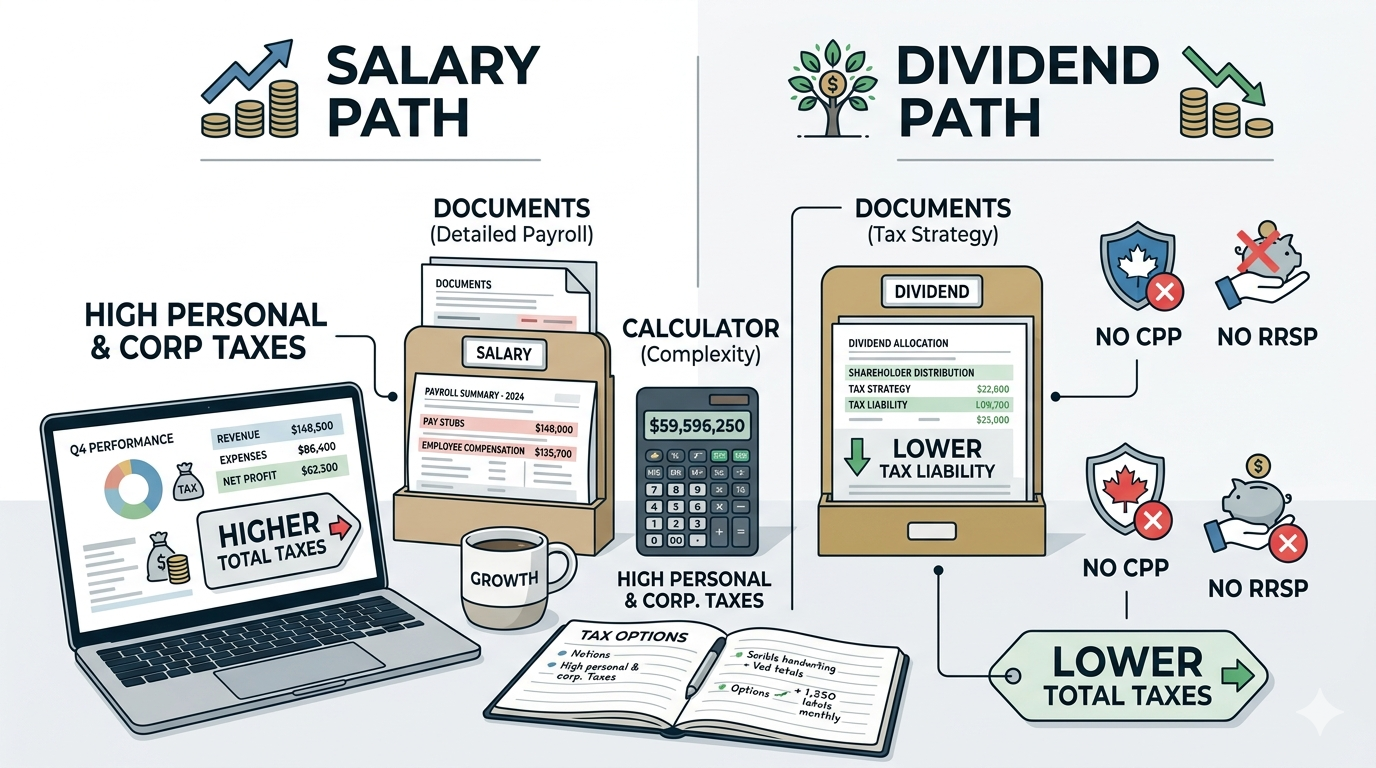
Same $50K.
Very different tax outcomes.
Option 1: Salary ($50K)
Here’s how it works:
The corporation pays you a $50,000 salary
Corporate income is reduced to $0 → no corporate tax
You pay personal tax + CPP (both employer and employee portions)
End Result:
Approximately $15,000 in total tax and CPP
Option 2: Dividend
This option involves a few more steps:
Step 1: Corporate Tax
$50,000 × 12.2% = ~$6,100
Remaining: $43,900
Step 2: Pay Dividend
You receive $43,900
Grossed up to about $50,500 taxable income
Step 3: Personal Tax
Federal tax: ~$6,800
Federal tax credit: -$4,300 → $2,500 net
Ontario tax: ~$2,200
Ontario tax credit: -$1,800 → $400 net
End Result:
$6,100 (corporate tax) + $2,900 (personal tax) = ~$9,000 total tax
The Trade-Off Most People Miss
At first glance, dividends look like the obvious winner.
You save about $4,000 in taxes
But here’s what often gets overlooked:
No CPP contributions
No RRSP contribution room
Many business owners don’t even realize they’re making this trade-off — it often gets defaulted during tax filing.
Why This Changes Over Time
The math isn’t static.
At different income levels, the strategy shifts.
Example at $100K income:
Dividends → ~$22,000 tax
Salary → ~$28,000 tax + CPP
You still save with dividends — but the gap narrows.
And at higher income levels, things like RRSP room and long-term planning become more important.
My Take
The goal isn’t just to pay less tax…
It’s to make better financial decisions over time.
How you pay yourself is one of the most important financial levers you have as a business owner.
Final Thoughts
There’s no one-size-fits-all answer.
The right strategy depends on:
Your income level
Your need for cash
Your long-term financial goals
If you’re self-employed and unsure what makes sense for your situation, it’s worth taking the time to get this right.
Because small decisions today can have a big impact over time.
