
MMM: Fixed vs. Variable Just Got Complicated
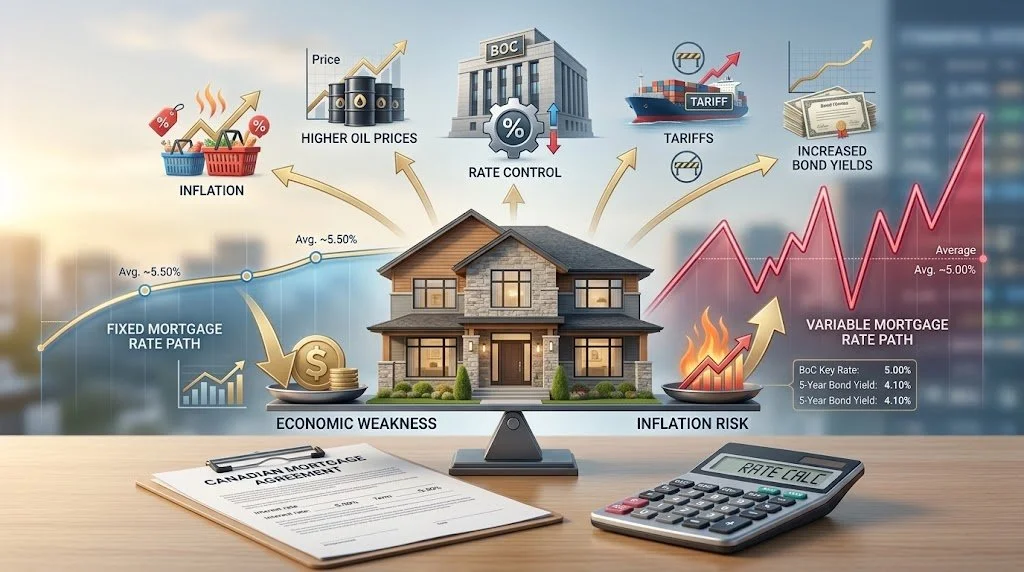
Mortgage rates have been unusually volatile lately.
Even after the Bank of Canada held its policy rate, there still seems to be a lot of uncertainty about where mortgage rates are headed next.
There are several competing forces affecting the Canadian economy right now, and they’re making the fixed-versus-variable mortgage decision more complicated than usual.
Two Major Risks Are Driving the Outlook
There are two key factors I’ve been watching closely:
Oil-driven inflation
The trade war
The trade war is now becoming a real factor for the Canadian economy. New U.S. tariffs and Canadian counter-tariffs are adding pressure to an economy that was already showing signs of weakness.
Canada also reported a loss of 42,000 jobs in August, while the Services PMI fell to 46.8, signalling contraction.
Normally, you might expect this combination to point toward lower interest rates:
Weak economy → Bank of Canada cuts rates → Variable mortgage rates fall
But there’s a problem.
Inflation remains around 3%, oil prices are elevated, and tariffs could create additional inflationary pressure.
That leaves the Bank of Canada balancing two competing risks.
If the Bank of Canada cuts rates:
It could provide relief to the economy, but it could also create more inflationary pressure.
If the Bank keeps rates higher:
It could help control inflation, but it puts additional pressure on consumers and businesses.
And that uncertainty is showing up in mortgage rates.
Variable Mortgage Rates Are Getting More Interesting
One of the more interesting things I'm seeing right now is the growing gap between fixed and variable mortgage rates.
Across many lenders, the spread between fixed and variable rates has widened to 0.50% or more.
That’s significant.
Remember, variable mortgage rates are generally based on:
Prime – Lender Discount = Variable Mortgage Rate
This means lenders don't necessarily need the Bank of Canada to cut rates before variable mortgage pricing becomes more competitive.
If a lender wants to attract more variable-rate borrowers, they can offer a larger discount from prime.
And that's exactly the kind of pricing I'm seeing in the market.
In some cases, the difference has become large enough that borrowers can qualify for a variable mortgage when they may not qualify for the comparable fixed mortgage.
That's something worth paying attention to.
Why Fixed Mortgage Rates Aren't Falling as Quickly
If the economy is weakening, you might expect fixed mortgage rates to fall as well.
But fixed mortgage rates don't directly follow the Bank of Canada's overnight rate.
They're heavily influenced by the bond market, and bond investors are still concerned about inflation.
Oil prices and tariffs add to those inflation concerns, which can push bond yields higher and keep fixed mortgage rates elevated.
So we're seeing two different forces at work:
Weak economy → Greater possibility of future Bank of Canada cuts → Positive for variable rates
Oil + tariffs → Inflation concerns → Higher bond yields → Pressure on fixed rates
That's why the mortgage market feels so uncertain right now.
So, Should You Choose Fixed or Variable?
There isn't one answer that works for everyone.
If you don't want to worry about your mortgage payment changing, a fixed mortgage may be worth the premium.
You're essentially paying for certainty.
You know what your payment will be, which can make budgeting much easier.
But if you have enough financial flexibility to handle some rate fluctuations, variable rates are becoming much more compelling.
In some cases, borrowers are starting 0.50% or more below fixed rates before the Bank of Canada even makes another cut.
That doesn't mean variable is automatically the better choice.
It means the potential reward may be more attractive for borrowers who are comfortable with the risk.
The Bottom Line
The interesting thing about variable mortgages right now isn't that the economic outlook is clear.
It's the opposite.
There are strong arguments pointing in both directions.
A weaker economy could eventually lead to lower rates, while oil prices, tariffs and inflation could keep rates higher for longer.
That's why choosing between fixed and variable shouldn't simply come down to which rate is lower today.
You also need to consider:
How long you expect to keep the mortgage
Your financial flexibility
Your tolerance for payment changes
Your qualification
Your overall financial goals
Variable isn't attractive because the outlook is clear.
It's attractive precisely because it isn't.
Thinking about renewing, refinancing, or getting a new mortgage? The right mortgage strategy depends on your individual situation, not just today's rate.
MMM : Do you actually know if you’re profitable?
Many business owners don't find out how their business actually performed until months after the year is over.
The bookkeeping gets cleaned up, financial statements are prepared, and eventually you get the answer:
“We made $140,000 last year.”
Or worse:
“Wait… we only made $14,000?”
By then, there isn't much you can do about it. The expenses have already been spent, pricing decisions have already been made, and any tax planning is largely looking backward.
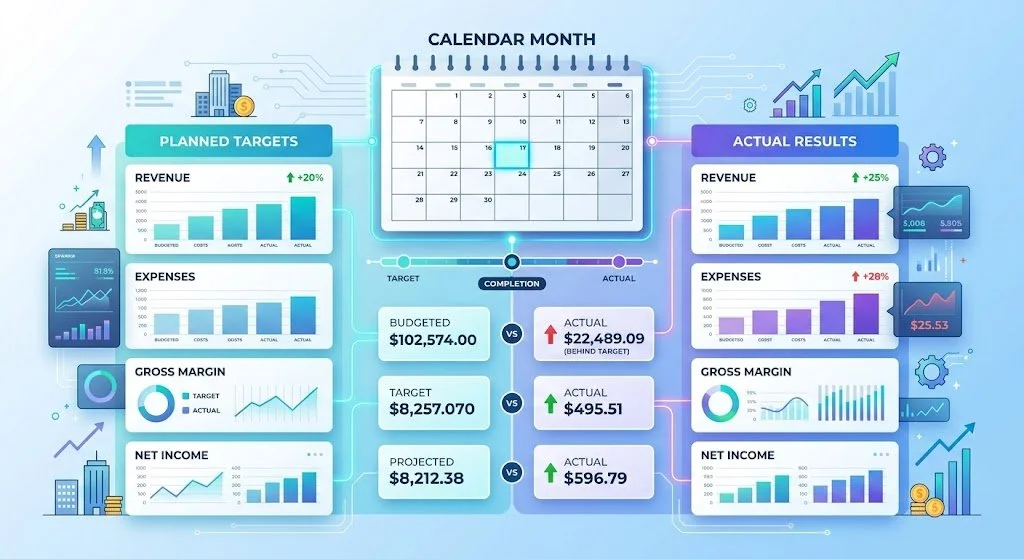
That's exactly why monthly budgeting and budget-to-actual analysis can be so valuable.
What Is Budget-to-Actual Analysis?
Budget-to-actual (BTA) analysis is simply comparing what you planned or expected to what actually happened.
Before the month begins, you establish targets for the numbers that matter most to your business.
Then, once the month is over, you compare those targets to your actual results.
For example, if your annual revenue goal is $600,000, your basic monthly target might be $50,000.
Personally, I like to pretend there are only 10 months in a year, so I might set the monthly target closer to $60,000 to create some breathing room.
The important part isn't the exact number.
It's establishing what “good” looks like before the month starts.
Why We Started Doing Monthly Budgeting
Two years ago, we started doing monthly budgeting and budget-to-actual analysis in our own business.
Before that, I was very reactionary. I would often deal with financial issues after the year was already over.
At first, monthly budgeting felt like another task to add to the list.
But it quickly became useful.
It helped us see when revenue was falling behind and gave us an opportunity to address costs before they got out of control.
Instead of waiting until year-end to ask, “What happened?”, we could ask that question while there was still time to do something about it.
A Real-World Example
Recently, a client told me that they estimated not having monthly budget-to-actual reporting was costing them around $60,000 in net income at one location.
Why?
Their labour costs were running higher as a percentage of revenue than they would have allowed if they had known about the problem earlier.
Without timely information, they didn't have the opportunity to make the necessary adjustments soon enough.
This is one of the biggest advantages of monthly BTA analysis:
It gives you information while you can still act on it.
Start With the Numbers That Matter
You don't need a complicated financial model with dozens of spreadsheets.
Start by deciding what you're actually trying to manage.
Depending on your business, that could include:
Revenue
Net income
Gross margin
Labour costs
Marketing expenses
Customer acquisition cost
Sales activity
Operating expenses
Then establish a target for each one.
For example, you might decide that:
Marketing should stay below 10% of revenue
Labour should stay below 30%
Gross margin should remain above 60%
The right numbers will be different for every business.
What matters is that you decide what your targets are before you see the results.
Don't Just Look at the Difference — Ask Why
Let's say your monthly revenue target is $60,000, but you finish the month at $56,000.
The $4,000 difference is important.
But the more important question is:
Why?
Did a deal not close?
Did you generate fewer leads?
Did your marketing spend change?
Did your close rate drop?
Were there unexpected delays?
The goal isn't simply to identify that you're behind.
The goal is to understand what caused the difference so you can make a better decision next month.
That's where bookkeeping starts moving from record keeping to decision making.
The Most Important Question: “So What?”
After reviewing your numbers, there is one question that matters more than anything else:
What are we going to change because of this information?
Maybe you need to adjust your pricing.
Maybe your marketing strategy needs to change.
Maybe you need to adjust staffing.
Maybe certain expenses need to be reduced.
Maybe your sales team needs to increase activity.
The numbers themselves aren't the solution.
The decisions you make because of the numbers are.
Don't Wait Until Year-End to Find Problems
Imagine you're behind your annual revenue goal in April.
You still have eight months to make adjustments.
You can change your sales strategy, increase marketing efforts, review pricing, control expenses, or make other changes to get back on track.
But if you discover the problem the following February, you've already lost the opportunity to respond in real time.
That's why monthly financial reporting can be so powerful.
It turns your financial information into something you can actually use to run the business.
You Don't Need a Complicated System
Budget-to-actual analysis doesn't have to mean building a 40-tab Excel model.
Start small.
Choose a few numbers that genuinely matter to your business.
Set the targets.
Compare the targets to reality.
Understand the differences.
And most importantly, ask:
“What are we going to do differently because of this information?”
That's where the real value is.
Monthly budgeting isn't just about knowing what happened.
It's about giving yourself enough information, early enough, to do something about it.
MMM : The hidden $80K cost of buying a home
A $1M House Isn’t Necessarily a $1M House
When most buyers compare homes, they focus on one number: the purchase price. But the sticker price is only part of the story. In many cases, two homes with very different prices can have surprisingly similar monthly carrying costs.
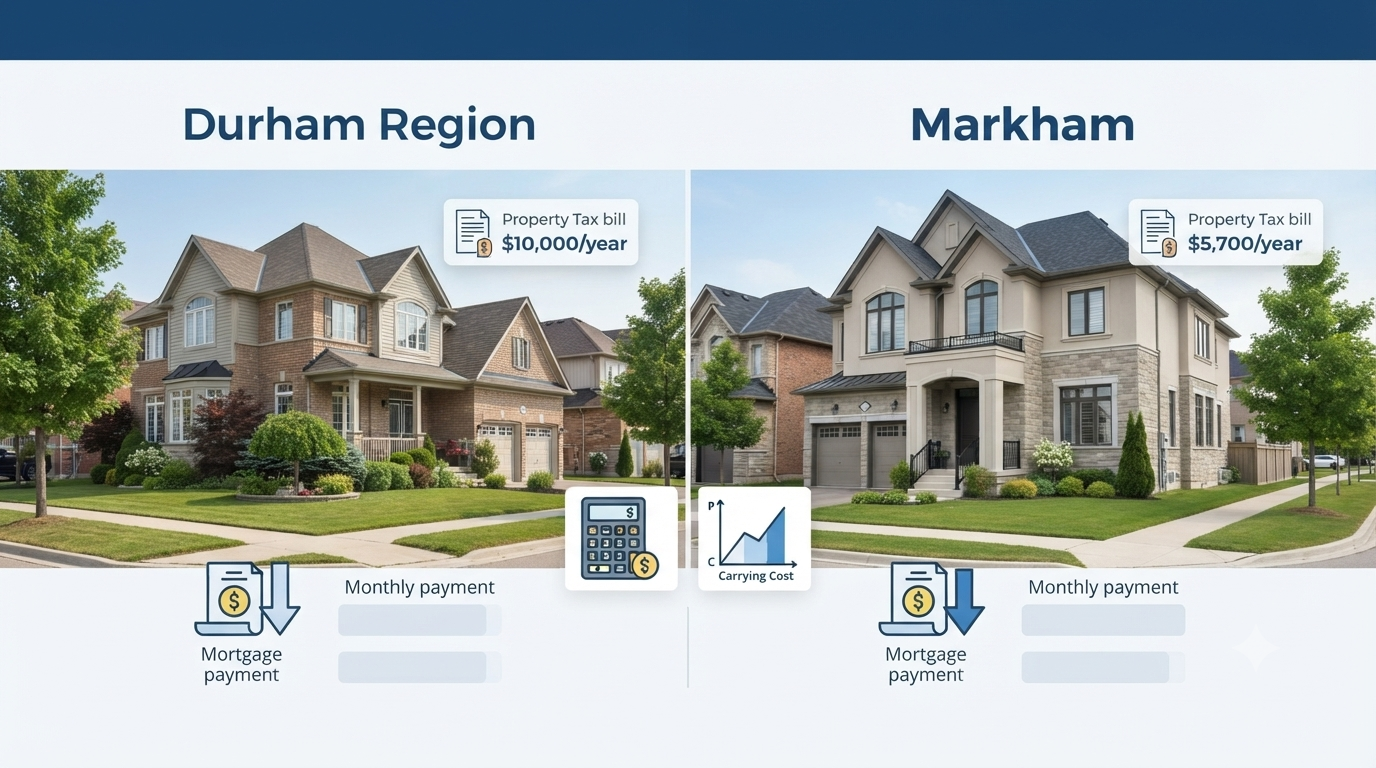
A recent comparison between Durham Region and Markham is a perfect example.
The Comparison
In Durham Region, a home worth roughly $1.2 million can easily carry property taxes close to $10,000 per year.
In Markham, a home worth approximately $1.47 million may have property taxes around $5,700 per year.
That is a difference of about $4,300 annually, or roughly $358 per month.
At current mortgage rates, an extra $358 per month is roughly equivalent to carrying about $80,000 more in mortgage debt.
At first glance, the Markham home appears to be $270,000 more expensive. However, once the property tax difference is factored into the monthly budget, the effective cash-flow gap starts to feel much smaller.
Why Property Taxes Matter
Many buyers assume that a more expensive home automatically means a much higher monthly payment. That is not always true.
Property taxes vary significantly from one municipality to another, and those differences can add up to thousands of dollars every year. Over time, that can have a meaningful impact on affordability.
Of course, this comparison is not perfect. Property taxes can change, and interest rates can change as well. The goal is not to calculate an exact number—it is to understand that ownership cost is more important than purchase price alone.
The Metric Most Buyers Miss
When comparing homes, consider the full carrying cost, including:
Mortgage payment
Property taxes
Utilities
Insurance
Maintenance
Condo fees (if applicable)
A lower-priced home with high property taxes can sometimes cost as much—or more—to own than a higher-priced home in a lower-tax municipality.
A Useful Rule of Thumb
Before deciding that one home is “too expensive,” ask:
What is the total monthly cost to own this property?
That single question often leads to a much more accurate affordability comparison than looking at the price tag alone.
The Bottom Line
Whether you are buying your first home, moving within the GTA, or evaluating an investment property, compare the carrying cost, not just the purchase price. The municipality can make a much bigger difference than many buyers realize.
If you are considering a home purchase and want help comparing the true monthly cost of different properties, I’m always happy to provide unbiased, genuine advice.
MMM : You're Not Alone (But That's Not the Point)
Real-life conversations often teach us more about money than any spreadsheet.
Yesterday, during lunch, I received a call from someone I hadn’t spoken to in years. This morning, I followed up with his wife. What began as a question about selling a property off-market turned into one of the most honest personal finance conversations I’ve had in a long time.
I’m sharing this story because it’s incredibly common. If you’ve experienced something similar—or know someone who has—you’re not alone. The situation may be common, but the way you respond to it is what makes the difference.
How the Conversation Started
He called about selling a single-family property in Windsor off-market.
Asking price: $475,000
Mortgage balance: $375,000
On the surface, it sounded straightforward.
Then he explained why they wanted to sell.
He said they were cash-flow negative, but when I dug deeper, the shortfall was only about $5,000 per year in property taxes and insurance. That alone wasn’t enough to explain the urgency, so I kept asking questions.
Over the past few years, they had:
Used up roughly $100,000 in savings
Maxed out every line of credit and credit card
Accumulated about $160,000 in unsecured debt
Another broker had suggested the obvious solution: refinance their primary residence, roll the credit cards and lines of credit into the mortgage, reduce the monthly payment, and move on.
My response was simple:
Debt consolidation only works if the thing that caused the debt has actually ended.
The Question That Really Matters
Consolidating debt can be an excellent tool when the debt has a clear finish line.
Examples include:
A temporary business loss
A maternity leave that has ended
A one-time medical or family expense
A short-term income interruption
In those cases, moving high-interest debt into a mortgage can create breathing room and provide a structured path to repayment.
But this situation was different.
$160,000 didn’t disappear because of one event. It disappeared over several years. That points to a pattern, not a temporary setback.
If you refinance a pattern, you haven’t solved the problem. You’ve simply reset the credit cards to zero and given the same spending or cash-flow issue a chance to rebuild itself.
The real question was never:
“Can we consolidate this debt?”
It was:
“Has the thing that caused this debt actually ended?”
The Two Options We Discussed
Once we looked at the full picture, there were really only two viable paths.
Option 1: Sell Two Properties
Use the proceeds from the first sale to pay off the credit cards and lines of credit completely.
Use the proceeds from the second sale to reduce the mortgage on the primary residence—not just refinance it.
The goal was to bring total housing costs (mortgage, property taxes, insurance, and utilities) to under 30% of household income, a common benchmark for sustainable housing affordability.
Option 2: Increase Household Income
His wife had stepped away from work during a career change. Returning to work and earning roughly $40,000 per year would bring their housing ratio to just above that same 30% benchmark.
It was clear there were personal reasons why returning to work wasn’t a simple decision. They didn’t share those details, and I didn’t push. My role wasn’t to judge—it was to present the math honestly, including the uncomfortable parts.
In the end, they chose Option 1.
Why I’m Sharing This
If you’re in a similar situation, the instinct to consolidate and move on is completely understandable. Sometimes it is the right move.
But before you sign refinance papers, ask yourself one question:
Is the thing that caused this debt actually over, or is it still happening?
That question can save years of frustration.
Sometimes Progress Feels Like a Step Backward
Selling assets, downsizing, delaying a purchase, or having a difficult conversation about income rarely feels like progress in the moment.
But there’s an important distinction:
A deliberate step backward with a plan can move you two steps forward.
An accidental step backward without a plan usually delays the same conversation until the numbers become even harder.
The emotional difference is enormous.
What These Conversations Really Look Like
I wish I’d had a camera running during that call—not to expose anyone, but because more people need to see what financial stress actually looks like.
It wasn’t dramatic.
It wasn’t a television-style crisis.
It was simply two people who had done many things right for a long time, reached a wall, and needed help seeing the entire picture instead of just the piece directly in front of them.
That is far more common than most people realize.
If This Sounds Familiar
If any part of this story feels uncomfortably familiar, please know that you are not the only one dealing with it.
Financial pressure often feels isolating, but these conversations happen every day behind closed doors.
Sometimes the most valuable thing isn’t a new mortgage product—it’s an honest second opinion.
If you’d like a candid sounding board to talk through your numbers and your options, I’m always happy to have a conversation.
No sales pressure. Just straightforward advice.
MMM: My worst year in business (and what it taught me about money)

I’m nowhere near where I was last year financially.
Not even close.
And there’s a reason for it.
My wife and I welcomed twins this year, and I took a few months off work. When I came back, I did the bare minimum for a while. I showed up, did what needed doing, and nothing more.
There was no consistency.
And if I’m being honest, we all know what actually moves the needle over time: the boring, repetitive things done consistently. The workouts. The follow-ups. The savings contributions. The mortgage payments. The habits that don’t feel exciting in the moment but compound quietly in the background.
Right now, I feel like I’m rebuilding from scratch. I’m relearning habits I let slip and rebuilding the muscle of simply showing up every day.
Naturally, my brain connected this lesson to the thing I think about most: money.
And it led me to one idea that I can’t stop thinking about.
Never go lower than your highest mortgage payment
This is not an official mortgage strategy. It’s simply a mindset that clicked for me.
Over the last few years, many homeowners saw their mortgage payments rise. Not everyone, but a large number did. And now that so many mortgages are coming up for renewal, the instinct is understandable:
“Let’s get the payment as low as possible.”
Lower payment. More breathing room. Better cash flow.
And for some people, that is absolutely the right move.
But this post is not for someone who is genuinely struggling to make payments. If life is tight, take the breathing room. Protect your household first.
This is for the person who can sustain the higher payment and is tempted to reduce it simply because the lender offers the option.
If you were already making the higher payment and surviving just fine, going back down may feel good today, but it can quietly add years to your mortgage.
Keeping the higher payment can dramatically shorten your repayment timeline and put future-you in a much stronger position.
This applies to more than mortgages
The same principle shows up in investing.
There was a stretch where I contributed $100 per month into a new corporate investment account. I knew $100 wasn’t going to change my life overnight.
That wasn’t the point.
The point was to start and to avoid going back to zero.
Consistency is not about the size of the action. It’s about refusing to shrink the habit once you’ve built it.
That $100 contribution taught me the same lesson my mortgage did:
Never go backwards.
A practical mortgage strategy: build a safety net first
Here’s the part that surprised me.
You don’t necessarily have to choose between flexibility and faster debt repayment.
One approach is to renew the mortgage with a 30-year amortization. That lowers the required monthly payment as much as possible.
Think of that as your safety net.
If you lose a job
If income drops
If unexpected expenses hit
If life gets tight
your contractual payment is lower.
Then, voluntarily increase your payment back to the amount you were already paying.
In other words, you keep the habit without locking yourself into the higher obligation.
Why not just keep the payment unchanged?
Because the contractual payment still matters.
A lower required payment can help preserve future borrowing capacity when qualifying for another property, a refinance, or other lending needs. Even if you voluntarily pay more every month, lenders often assess qualification based on the contractual obligation.
So you may be able to get:
the faster debt paydown of a higher payment, and
the flexibility and qualification benefit of a lower required payment.
That can be a powerful combination.
One important note: every lender handles voluntary payment increases differently. Some allow recurring payment increases online, while others require manual lump-sum payments or paperwork. It’s worth checking the rules before renewing.
The real lesson from this year
When I look back at this year, the biggest financial lesson wasn’t about interest rates or investments.
It was about momentum.
I lost momentum in business for a while. And rebuilding it has reminded me that progress rarely comes from dramatic actions. It comes from continuing the small actions after the excitement disappears.
The same is true for money.
Keep the investment contribution going.
Keep the mortgage payment up if you can.
Keep the savings habit alive.
Keep showing up.
If your mortgage is coming up for renewal, try reframing the question.
Instead of asking:
“What is the lowest payment I can get?”
ask:
“What payment level can I realistically maintain, and how can I structure it in the safest way possible?”
That is a very different conversation.
And it’s the same lesson as the $100 contribution. It’s the same lesson as rebuilding my business after taking time off.
Never go backwards.
The size of the step matters far less than whether you keep taking it.
MMM: The forever war nobody's pricing in yet

The recent escalation between the United States and Iran has largely faded from the headlines—but that doesn't mean the risk has disappeared. In fact, it may be one of the biggest macroeconomic stories that isn't getting enough attention.
After nearly a week of renewed military exchanges, a brief ceasefire lasted only days before breaking down. While markets have reacted to each new development, the larger question remains: What happens if this conflict becomes a long-term reality rather than a short-term event?
Why This Matters
One of the biggest concerns is the Strait of Hormuz, a narrow waterway controlled by Iran through which roughly 20% of the world's oil supply passes.
When tensions rise in the region:
Oil tankers may delay shipments.
Insurance costs for shipping increase.
Global oil prices often rise.
In a prolonged supply disruption, some economists estimate that West Texas Intermediate (WTI) crude oil could climb as high as $167 per barrel. While that's a worst-case scenario, even the possibility of supply interruptions can put upward pressure on energy prices.
Higher Oil Prices Affect More Than Gas
A spike in oil prices doesn't simply mean paying more at the pump.
Transportation costs increase, making it more expensive to move products across the country and around the world. Those higher costs can eventually filter into:
Grocery prices
Consumer goods
Manufacturing
Shipping and logistics
In other words, sustained increases in oil prices can contribute to broader inflation across the economy.
Markets Are Watching—But Are They Looking Far Enough Ahead?
Financial markets have certainly noticed the conflict.
Bond yields have moved sharply with every announcement of a ceasefire and every renewed escalation. Treasury yields and mortgage-related bond yields have reflected that uncertainty for months.
However, markets still appear to be treating this as a conflict that will eventually resolve.
The bigger risk is a scenario where elevated geopolitical tensions become the new normal. If higher oil prices persist for years rather than months, inflation could remain more stubborn than many currently expect.
We've already seen how lasting geopolitical events can reshape prices. The Russia-Ukraine war contributed to permanent increases in many food costs that consumers continue to feel today.
What Does This Mean for Mortgage Rates?
This doesn't necessarily mean everyone should rush into a fixed-rate mortgage.
But it does highlight an important point: your mortgage strategy shouldn't be based solely on what the Bank of Canada might do over the next few months.
The more important question may be:
What does inflation look like over the next two to three years?
If inflation remains elevated because of persistent global supply pressures, interest rates may also stay higher for longer than many expect.
Looking Ahead
Another important question is how a prolonged period of higher oil prices could interact with Canada's slowing economy. That's a complex topic—and one worth exploring in more detail.
For homeowners approaching a mortgage renewal, these broader economic trends deserve just as much attention as the next Bank of Canada announcement.
If your mortgage is renewing before the next Bank of Canada rate decision, now is a good time to review your options and understand how today's global events could affect tomorrow's borrowing costs.
MMM: The Fixed vs Variable Question Everyone Is Asking
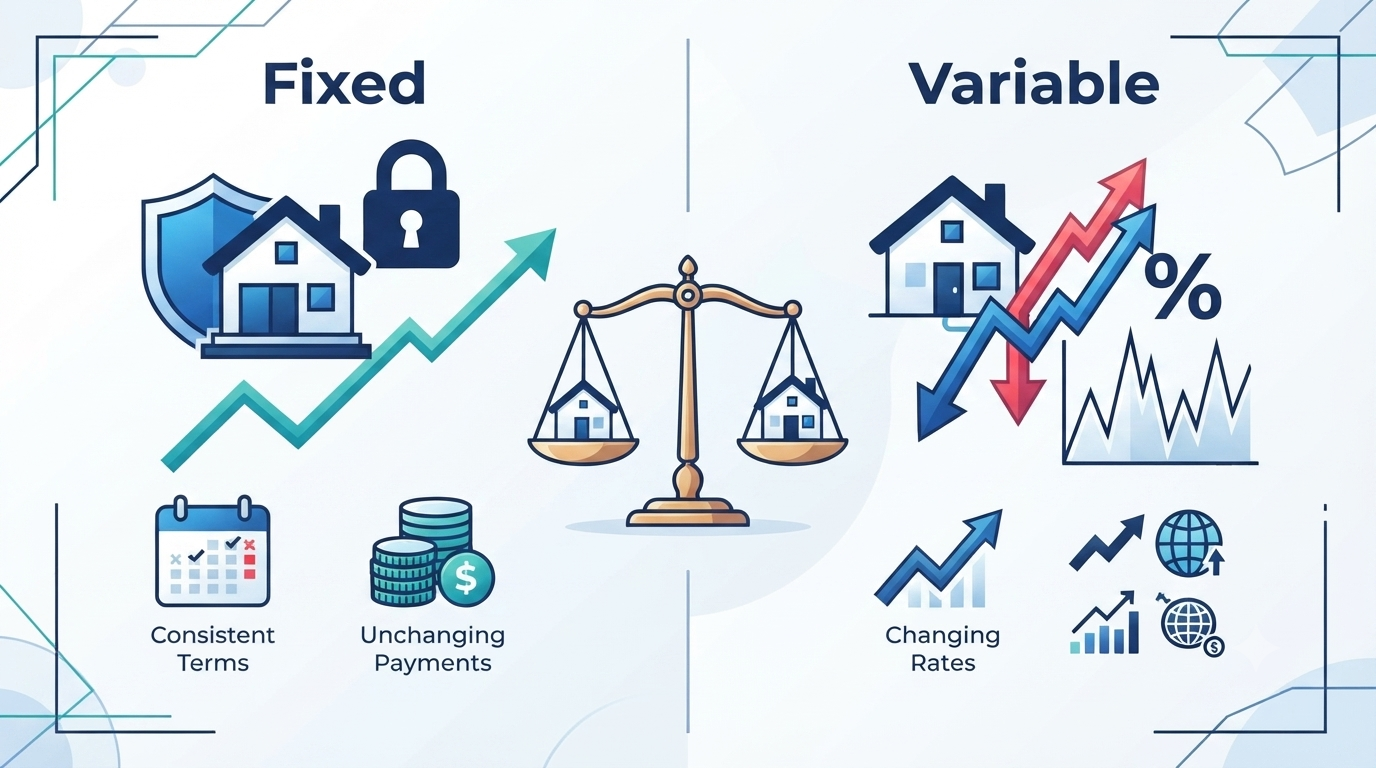
The Bank of Canada is announcing its latest interest rate decision this week, and while no major changes are expected, one question continues to come up:
Should I choose a fixed or variable mortgage?
Many people make this decision by comparing today's mortgage rates. If variable rates are lower, it might seem like the obvious choice. If fixed rates are lower, the opposite may feel true.
But the reality is more nuanced.
It's Not Just About Today's Rate
Instead of asking:
"Which mortgage has the lower interest rate today?"
Consider asking:
"Who do I want to carry the risk?"
This simple shift in perspective can help you make a more informed financial decision.
Understanding Variable Mortgages
With a variable-rate mortgage, you're taking on the interest rate risk yourself.
If interest rates decrease, your mortgage could become more affordable.
If rates increase, your borrowing costs may rise.
The potential for savings comes with the possibility of higher costs if market conditions change.
Understanding Fixed Mortgages
A fixed-rate mortgage works differently.
When lenders determine a fixed mortgage rate, they don't simply choose a number. They look closely at the Government of Canada bond market, particularly the five-year bond yield.
That market already reflects expectations about:
Future Bank of Canada rate changes
Inflation
Economic growth
Investor expectations over the coming years
Lenders then add their costs and profit margin before offering you a fixed rate.
In other words, choosing a fixed mortgage means you're paying for predictability and stability.
Neither Option Is Automatically Better
It's common to hear people ask whether fixed or variable is the "better" mortgage.
The truth is that both options are priced based on today's market expectations.
A higher fixed rate doesn't necessarily mean it's a worse deal, and a lower variable rate doesn't automatically make it the smarter choice.
The key difference is who absorbs the uncertainty if the future doesn't unfold as expected.
Variable: You take on the risk.
Fixed: The lender takes on more of that risk, and you pay for the certainty.
Which Option Is Right for You?
Rather than focusing only on today's interest rates, think about your own comfort level with uncertainty.
Ask yourself:
Which type of risk am I more comfortable managing?
For some homeowners, the flexibility of a variable mortgage makes sense. For others, the stability of fixed payments provides valuable peace of mind.
The best mortgage isn't always the one with the lowest rate—it's the one that aligns with your financial goals, your budget, and your tolerance for risk.
If you're deciding between fixed and variable, take the time to look beyond the numbers. Understanding the trade-offs can help you make a decision that works for you both today and in the years ahead.
MMM: Where Does Your Next Dollar Go?
Most people believe they have an income problem.
But what if the real issue isn't how much money you make—it's how you organize it?
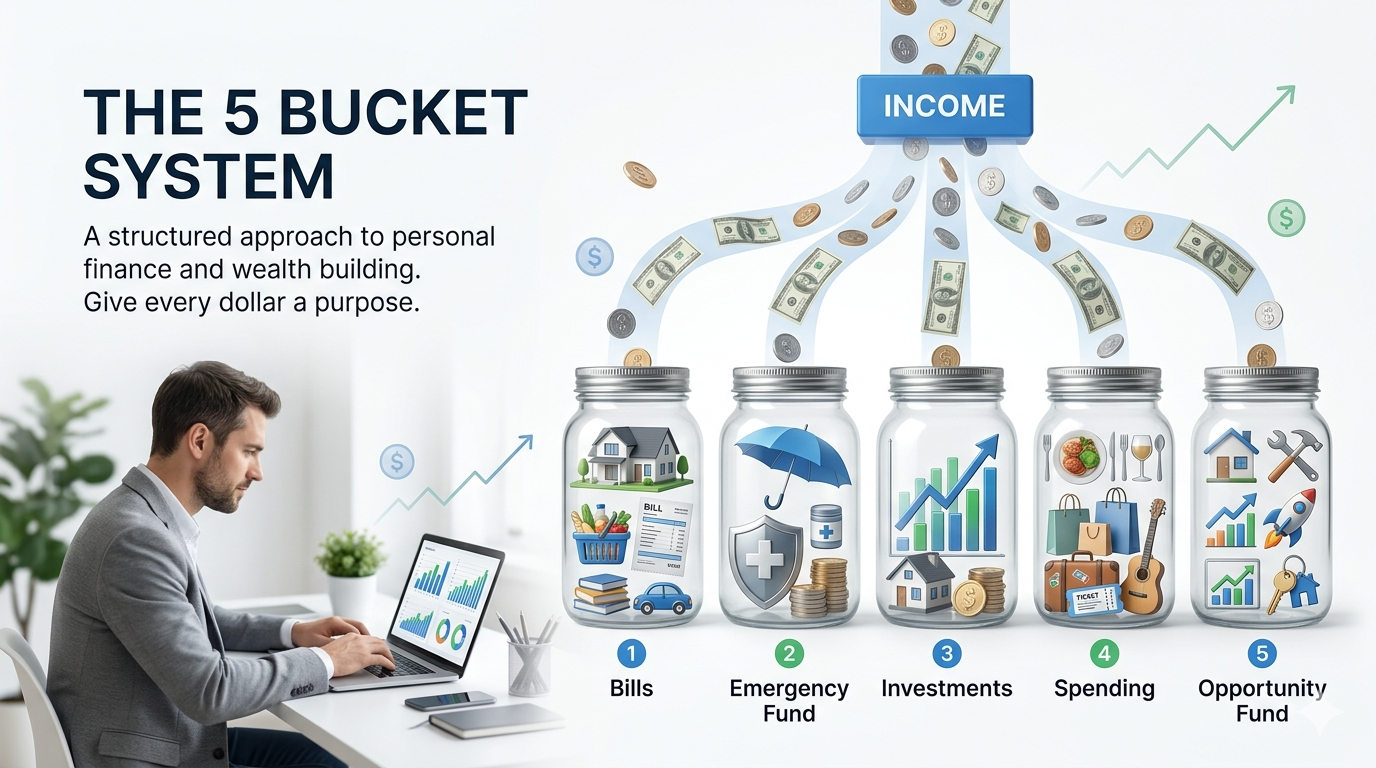
I recently came across a concept called the 5 Bucket System, and while the idea itself isn't revolutionary, the way it's structured really stood out. It's a simple framework that helps ensure every dollar you earn has a purpose.
If you're working toward financial freedom, investing in real estate, or building long-term wealth, this system is worth considering.
Every Dollar Needs a Job
Many people focus on earning more money, thinking that a higher income will automatically lead to wealth.
The truth is, income alone doesn't create wealth. Without a clear plan, even a high income can disappear just as quickly as it comes in.
I've experienced this firsthand.
Between running a mortgage business, managing a tax practice, investing in private businesses, owning rental properties, and juggling multiple financial responsibilities, money is constantly moving between accounts. Without a system in place, it can quickly become overwhelming.
That's exactly why the 5 Bucket System caught my attention.
What Is the 5 Bucket System?
The concept is straightforward: divide your money into five distinct categories, each with a specific purpose.
1. Bills
This bucket covers your essential monthly expenses, including:
Mortgage or rent
Utilities
Insurance
Groceries
Loan payments
Other recurring bills
By separating your fixed expenses, you always know your necessities are covered.
2. Emergency Fund
Life is unpredictable.
Unexpected repairs, medical expenses, or temporary income loss can happen at any time. An emergency fund provides financial security without forcing you into debt.
This bucket is designed to protect you when life doesn't go according to plan.
3. Investments
This is where long-term wealth begins.
Whether you're contributing to a TFSA, RRSP, FHSA, real estate investments, or a diversified investment portfolio, this bucket is dedicated to growing your wealth over time.
Consistent investing even in small amounts can make a significant difference over the long run.
4. Spending
Building wealth doesn't mean you can never enjoy your money.
This bucket is specifically for the things that make life enjoyable:
Dining out
Vacations
Entertainment
Hobbies
Shopping
Because you've planned for it, you can spend without guilt.
5. Opportunity Fund
This is my favorite bucket—and the one I believe many people overlook.
Instead of saving with no clear objective, this bucket is reserved for future opportunities that require quick action.
It could be used for:
A down payment on your next investment property
A renovation project
Starting a business
A private lending opportunity
Investing during a market correction
Any opportunity that requires immediate access to cash
The people who consistently seem to find incredible investment opportunities usually aren't just lucky.
They're prepared.
They've already built the financial flexibility to act when opportunity appears.
Cash Creates Options
One of my favorite sayings is:
Cash gives you options.
And options create wealth.
When you have available capital, you're able to make decisions others simply can't.
While others are trying to figure out how to finance an opportunity, you're already in a position to move.
That's often the difference between watching opportunities pass by and taking advantage of them.
Do You Need Five Bank Accounts?
Not necessarily.
Some people may prefer separate bank accounts, while others use budgeting software or multiple savings categories within a single account.
Personally, depending on your financial situation, you may even find yourself with more than five buckets.
The important lesson isn't the number of accounts.
It's making sure every dollar has a purpose before it reaches your everyday spending account.
Final Thoughts
Financial success isn't always about earning more.
Often, it's about creating a system that helps you make intentional decisions with the money you already have.
The 5 Bucket System provides a simple framework for organizing your finances, reducing stress, and preparing for both expected expenses and unexpected opportunities.
Because when opportunity knocks, the people with cash can act.
Everyone else watches.
MMM: The Bank of Canada Isn't the Only Institution Moving the Housing Market
When Canadians think about the housing market, one institution usually gets all the attention:
The Bank of Canada.
Every interest rate announcement sparks headlines, social media discussions, and countless predictions about where home prices and mortgage rates are headed next.
While the Bank of Canada plays a significant role, it's only one piece of a much larger puzzle.
Over the past two years, governments and regulators have repeatedly introduced changes that influence the housing market—often without changing interest rates at all.

The Institutions That Shape Canada's Housing Market
Many people assume interest rates are the biggest driver of housing activity. In reality, several organizations work together to influence how credit flows through the economy.
These include:
The Bank of Canada, which sets the overnight interest rate.
OSFI (Office of the Superintendent of Financial Institutions), which establishes lending rules for federally regulated banks.
CMHC (Canada Mortgage and Housing Corporation), which oversees mortgage insurance and qualification requirements.
Federal and provincial governments, which introduce financing programs, tax incentives, and housing policies.
Each of these institutions has the ability to affect borrowing costs, mortgage accessibility, and housing demand.
A Recent Example: OSFI's Domestic Stability Buffer
A great example happened just last week.
OSFI announced a reduction to the Domestic Stability Buffer (DSB)—the amount of capital Canada's largest banks are required to hold as a safeguard during periods of financial stress.
While this wasn't an official interest rate cut, some economists believe the move could have an economic impact similar to a 0.25% reduction in interest rates, giving banks more flexibility to lend and increasing the availability of credit.
I also created a short video explaining what this means and why it matters.
🎥 Watch the Instagram Reel here:
https://www.instagram.com/reel/DaD09HqTGXI/?utm_source=ig_web_copy_link&igsh=MzRlODBiNWFlZA==
The Bigger Picture
One message has become increasingly clear over the past two years:
Housing—and especially residential development—is simply too important to the Canadian economy to be left entirely to market forces.
When housing markets begin to slow, policymakers don't rely solely on interest rates to stimulate activity.
Instead, they often adjust:
Banking regulations
Mortgage qualification rules
Capital requirements
Government financing programs
Housing incentives
Tax policies
Each of these changes can influence lending, affordability, and overall market activity just as much as a change to the overnight rate.
Whether you see these actions as market stabilization or government intervention is ultimately a matter of perspective.
But one thing is certain: they shape the direction of Canada's housing market.
Don't Just Watch the Bank of Canada
If you're trying to understand where the housing market is headed, don't limit your attention to interest rate announcements.
Keep an eye on the entire system.
Changes from regulators like OSFI, updates from CMHC, and new government housing policies can all have meaningful impacts on buyers, homeowners, investors, and developers.
The more informed you are, the better equipped you'll be to make smart financial and real estate decisions.
Money Move of the Week
The biggest housing policy changes don't always come from interest rates.
Sometimes the most important developments happen quietly—without a single Bank of Canada announcement.
Understanding the broader system can give you an edge long before the headlines catch up.
MMM: Are We Heading Towards Stagflation?
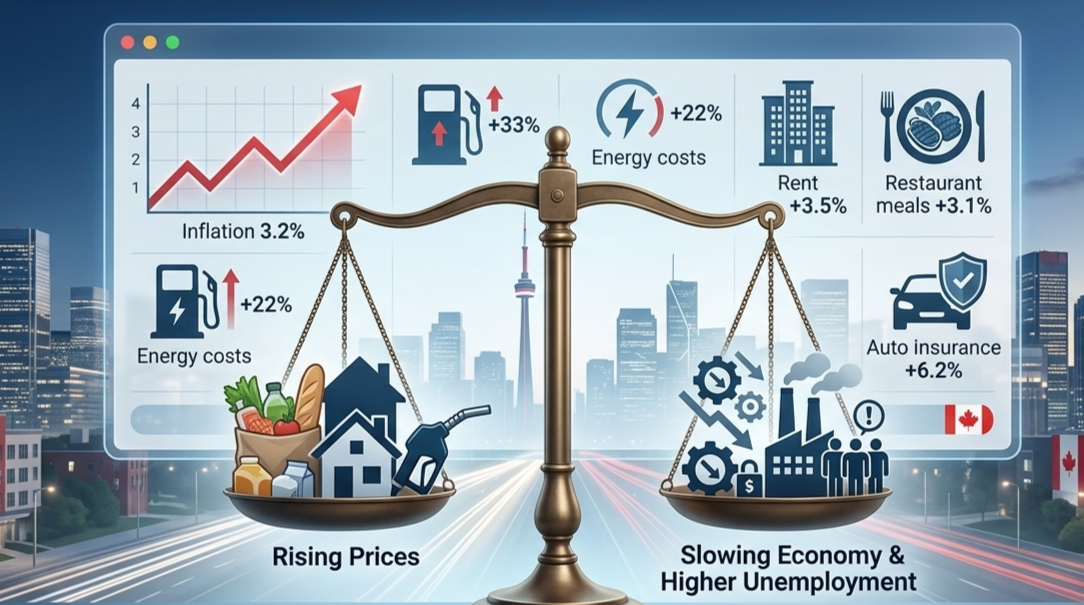
Canada's inflation rate climbed to 3.2% in May, a figure that may not seem alarming at first glance. However, when combined with slowing economic growth and a gradually weakening job market, it raises an important question:
Could Canada be moving toward stagflation?
While we're not there yet, understanding the warning signs can help homeowners, investors, and everyday Canadians make smarter financial decisions.
What Is Stagflation?
Stagflation is a rare economic environment where inflation remains high while economic growth slows and unemployment rises.
It's particularly challenging because it impacts households from multiple directions:
Everyday expenses become more expensive.
Job security becomes less certain.
Interest rates may stay elevated longer than expected.
Unlike a typical economic slowdown, stagflation limits the ability of central banks to stimulate the economy without making inflation even worse.
Inflation Is Becoming More Widespread
One of the biggest contributors to May's inflation increase was gasoline, which rose 33% year over year. Overall energy prices increased 22%.
The impact of higher fuel costs doesn't stop at the gas station.
As transportation and operating costs rise, businesses often pass those expenses on to consumers, resulting in higher prices across the economy.
Recent data already reflects this trend:
Restaurant meals: +3.1%
Auto insurance: +6.2%
Rent: +3.5%
Perhaps even more important, inflation excluding gasoline also moved higher, suggesting that price pressures are spreading across multiple sectors rather than being driven by a single category.
Why This Matters
Inflation on its own is manageable. The greater concern is when inflation stays elevated while the broader economy continues to weaken.
This creates a difficult balancing act for policymakers.
Normally:
Rising inflation leads to higher interest rates.
Slowing economic growth leads to lower interest rates.
Stagflation presents both challenges simultaneously, leaving central banks with fewer effective policy options.
What It Means for Homeowners and Investors
If inflation remains persistent while economic conditions soften, Canadians could face several challenges:
Higher Borrowing Costs
Mortgage rates may stay elevated for longer, increasing borrowing costs for homebuyers and making refinancing less attractive.
Pressure on Consumer Spending
As households spend more on necessities like fuel, housing, and insurance, discretionary spending tends to decline, which can slow business growth.
Slower Housing Activity
Higher financing costs and reduced consumer confidence can put pressure on housing demand, leading to a more cautious real estate market.
Investment Volatility
Corporate profits may come under pressure as operating costs rise and consumer spending slows, creating a more uncertain environment for investors.
Are We in Stagflation Right Now?
Not necessarily.
A true stagflation environment would likely involve significantly higher inflation alongside a much weaker labour market than Canada is currently experiencing.
However, the recent data suggests that several key indicators are moving in a direction worth monitoring.
Rather than reacting to a single headline, it's important to watch the broader trends over time.
Key Indicators to Watch
Instead of focusing on daily news cycles, keep an eye on these economic signals:
Inflation: Is it continuing to rise across multiple categories?
Unemployment: Is the labour market weakening further?
Bond yields: Are investors expecting higher inflation and interest rates to persist?
Together, these indicators provide a clearer picture of where the economy may be heading than any single monthly report.
The Bottom Line
One inflation report doesn't define the future of the Canadian economy. But a consistent pattern of rising inflation, slowing growth, and weakening employment deserves attention.
Successful investing and long-term wealth building aren't about reacting to headlines—they're about recognizing trends early and making informed decisions.
For now, the focus remains on inflation, unemployment, and bond yields rather than short-term market noise. Staying informed and maintaining a long-term perspective will always be a stronger strategy than chasing the latest headline.
MMM : From Geopolitics to Your Mortgage Rate

The biggest global story right now is the tentative peace agreement between the United States and Iran.
After months of conflict, multiple countries have confirmed that both sides have agreed to a framework aimed at ending hostilities and reopening the Strait of Hormuz, with a formal signing expected later this week.
At first glance, this might feel like a distant geopolitical headline. But for Canadians watching mortgage rates and inflation, it actually matters a lot.
It all starts with oil
Following the announcement, oil prices dropped roughly 5% as markets began removing the “geopolitical risk premium” that had been built into energy prices.
That shift is important because oil has been one of the key drivers of inflation risk.
When oil prices rise, the impact doesn’t stay in one place. It spreads through the economy:
Transportation costs increase
Goods become more expensive to move and produce
Businesses pass those costs to consumers
Overall inflation rises
And when inflation rises, central banks are forced into a tighter position.
They either keep interest rates higher for longer, or increase rates further to bring inflation back under control.
For everyday Canadians, that shows up as higher borrowing costs, more expensive mortgages, and tighter monthly budgets.
The potential shift: easing inflation pressure
The positive angle here is that lower oil prices remove some of that inflation pressure.
As inflation concerns ease, bond investors typically become more comfortable accepting lower yields.
We’ve already seen the Canadian 5-year government bond briefly dip below 3% before bouncing back as markets digest the news and reassess whether the agreement will actually hold.
That matters because fixed mortgage rates are heavily influenced by the 5-year Government of Canada bond yield.
If bond yields trend lower over time, fixed mortgage rates tend to follow.
What the Bank of Canada is watching
In its most recent communications, the Bank of Canada highlighted two major risks:
Trade and tariff uncertainty
Oil-driven inflation
We still don’t have much clarity on tariffs.
But if this agreement is formally signed and holds, one of the major inflation risks facing the global economy may begin to fade.
That would be supportive for borrowers, supportive for fixed mortgage rates, and generally positive for investors who benefit from lower financing costs.
Not out of the woods yet
That said, markets are pricing in optimism right now but optimism is not the same as certainty.
The key moment to watch is the expected signing later this week, and more importantly, whether both sides actually follow through in the weeks that follow.
Until then, volatility is still very much on the table.
MMM: You Pulled Out Equity. Did You Accidentally Create Non-Deductible Debt?
With the self-employed tax filing deadline approaching, it's a good time to revisit one of the most common tax mistakes real estate investors make when refinancing their properties.
Many investors focus on finding the next deal, growing their portfolio, and accessing equity. But few pay enough attention to how those borrowed funds are handled after the refinance.
That oversight can have significant tax consequences.
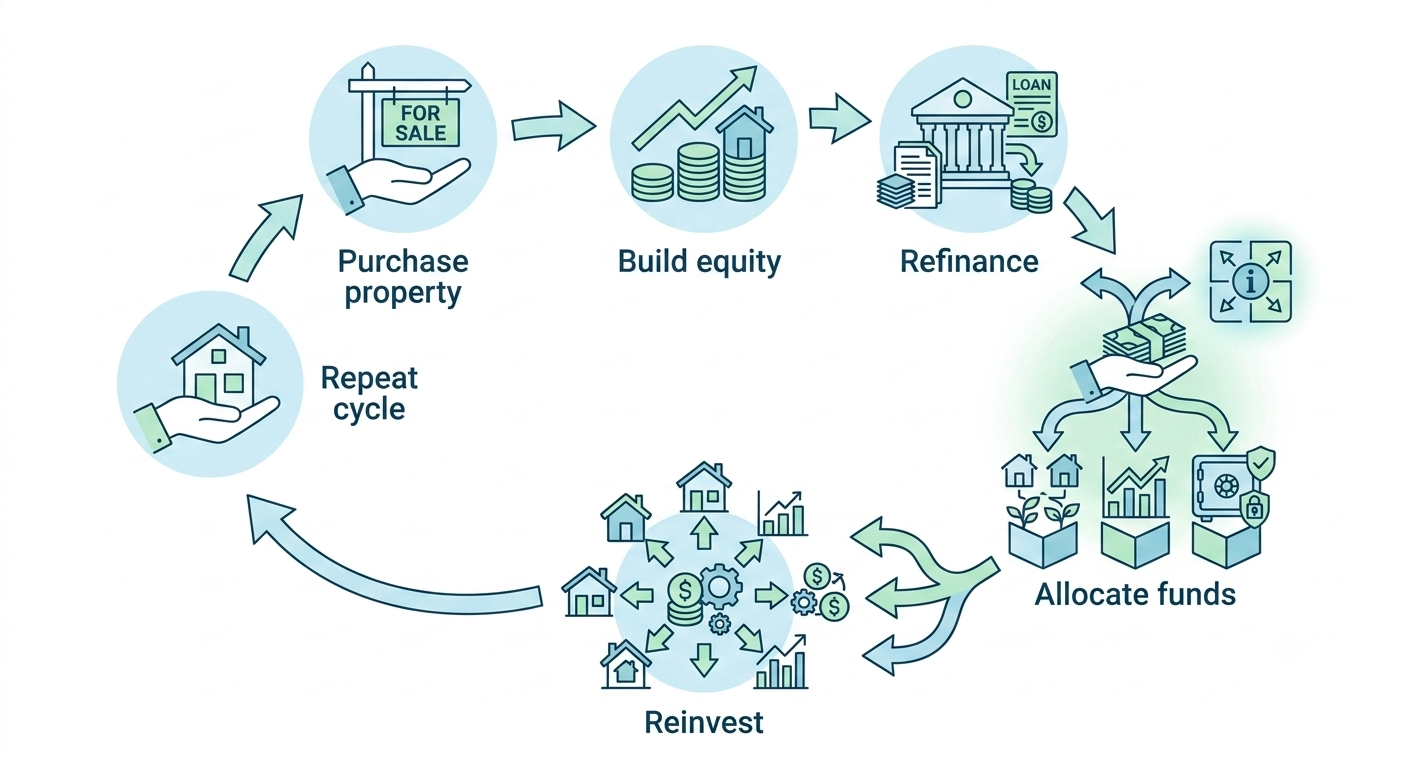
The Common Real Estate Investing Cycle
For many investors, the process looks something like this:
Purchase a property
Renovate it or hold it for appreciation
Build equity over time
Refinance the property
Pull out equity to fund the next investment
On the surface, this is a smart and common growth strategy.
The problem isn't the refinance itself.
The problem is what happens next.
What the CRA Actually Cares About
One of the biggest misconceptions among investors is that the deductibility of interest depends on which property the loan is attached to.
In reality, the CRA generally focuses on something much more important:
What was the borrowed money actually used for?
This distinction is critical.
The source of the loan matters less than the use of the funds.
If borrowed money is used for the purpose of earning income from a business or investment, the interest may be deductible. If the funds are used for personal purposes, the deductibility may be lost.
A Real-World Example
Let's say you refinance an investment property and pull out $200,000 in equity.
If that $200,000 is used directly to:
Purchase another investment property
Invest in income-producing assets
Fund a business investment
Acquire assets intended to generate income
there may be a strong argument that the interest on that borrowed money remains tax deductible.
However, many investors unintentionally create problems by changing the flow of funds.
How investors Accidentally Create a Tax Problem
A refinance is completed.
The funds are deposited into a personal chequing account.
The investor reimburses themselves for past expenses.
Some of the money goes toward:
Personal debt repayment
Household expenses
Vacations
Vehicle purchases
Other lifestyle spending
Then, with whatever remains, they invest.
This is where things become complicated.
Once borrowed funds become mixed with personal spending, it can become much more difficult to establish a clear connection between the loan and the income-producing investment.
In other words, the deductibility of the interest may be compromised.
Why the Flow of Funds Matters
Two investors can refinance the exact same property.
They can borrow the exact same amount.
They can have identical interest rates.
Yet one investor may end up with deductible interest while the other does not.
The difference often comes down to documentation, tracing, and the flow of funds.
Tax efficiency is frequently determined by structure, not just strategy.
Structure Matters More Than Most Investors Realize
Many investors spend considerable time analyzing market conditions, interest rates, and property values.
Far fewer spend time planning how refinanced funds will move from one account to another.
Yet that simple detail can have a significant impact on the long-term tax efficiency of a portfolio.
A well-structured refinance strategy can help preserve deductibility and maintain clear documentation.
A poorly structured one can create unnecessary complexity and potentially reduce tax benefits.
Final Thoughts
Refinancing can be a powerful tool for growing a real estate portfolio, but it's important to understand that accessing equity is only part of the equation.
How you handle those funds after the refinance can be just as important as the refinance itself.
If you're planning to pull equity from an investment property, reviewing the structure before moving the funds can help avoid costly mistakes down the road.
MMM: Canada Is Officially In A Recession. The Bigger Question Is: What Happens Next?

Canada officially entered what economists call a technical recession this week after recording two consecutive quarters of negative GDP growth.
Depending on your perspective, some people may view this as a major economic turning point, while others may argue the economy is still holding up reasonably well.
However, for those working in real estate, construction, development, mortgage financing, renovations, furniture sales, and home services, the news may feel more like a confirmation than a surprise.
Many are likely asking:
"Wait... we weren't already in one?"
Recessions Don't Always Start with GDP
Most people imagine a recession follows a straightforward sequence:
GDP falls
A recession begins
Jobs are lost
Housing weakens
In reality, economic slowdowns often develop gradually, with certain sectors feeling the impact long before GDP data officially confirms it.
In Canada's case, much of the housing and construction industry has been navigating these challenges for several years.
How the Slowdown Unfolded
1. Housing Demand Softened
As interest rates increased beginning in 2022, affordability worsened and buyer demand started to decline.
2. Transactions Slowed
Many buyers and sellers chose to wait on the sidelines, creating a significant drop in housing activity throughout 2023 and beyond.
3. Construction Activity Weakened
Developers faced higher financing costs, increased construction expenses, and greater uncertainty, causing many projects to be delayed or reconsidered.
4. Investment Began Drying Up
Pre-construction sales became more difficult, project viability declined, and some developments were postponed indefinitely.
5. Renovation Spending Declined
Homeowners became more cautious with discretionary spending, leading to slower demand for renovation projects and home improvements.
6. Suppliers Started Feeling the Pressure
Furniture retailers, appliance suppliers, building material companies, and manufacturers initially weathered the slowdown but increasingly faced challenges through 2024 and 2025.
7. Housing-Related Industries Slowed
Mortgage brokers, realtors, lawyers, appraisers, developers, contractors, and tradespeople experienced reduced activity as fewer transactions moved through the system.
8. Hiring Became More Cautious
Many businesses implemented hiring freezes, delayed expansion plans, and focused on controlling costs.
9. Unemployment Increased
As economic activity slowed, job losses and reduced hiring opportunities became more visible across multiple industries.
10. GDP Finally Confirmed the Slowdown
After years of weakening activity across key sectors, GDP data has now officially confirmed what many businesses and workers have already been experiencing.
Why This Recession Feels Different
One of the most interesting aspects of the current recession is how unevenly it is affecting Canadians.
For example:
A homeowner who locked in a low mortgage rate in 2021 may feel little financial stress.
A recent graduate struggling to secure interviews may view the economy very differently.
A developer attempting to launch a new condo project today may face significant challenges due to financing and market conditions.
This creates a situation where economic experiences vary dramatically depending on industry, location, and personal circumstances.
Can Government Policy Help?
The next major question is whether government initiatives can help slow or reverse the contraction.
One example is the recently announced GST/HST rebate programs aimed at encouraging housing construction.
If these incentives meaningfully improve project economics, they could:
Support new housing development
Create jobs
Increase construction activity
Improve investment confidence
Contribute to future economic growth
Whether these measures will be enough remains to be seen.
What Happens Next?
The key questions moving forward are:
How severe will this recession become?
How long will the slowdown last?
How broadly will it impact different sectors of the economy?
While the answers remain uncertain, one thing is clear:
Every recession eventually ends.
And every recession is followed by recovery.
The challenge for businesses, investors, and homeowners is positioning themselves to navigate the current environment while preparing for the opportunities that emerge when growth returns.
MMM: HELOC Strategy
I was supposed to be relaxing in Banff this weekend…
But instead, I somehow ended up thinking about mortgage structures again.
And I came across something that made me pause for a second.
Honestly, I’m hoping someone reads this and tells me why it doesn’t work.
Because if it actually does, there are likely a lot of investors and homeowners currently under cash flow pressure who could benefit from understanding it.

The Idea: Restructuring at Renewal
At renewal, most people simply sign into another standard amortizing mortgage.
But in some cases, there may be an opportunity to restructure a large portion of the balance into an interest-only HELOC instead.
Let’s break it down.
Example Scenario
Mortgage balance: $750,000
Home value: $937,500
Remaining amortization: 25 years
Renewal rate: 4%
Standard renewal payment:
≈ $3,958/month
The Alternative Structure (Hypothetical)
Federally regulated lenders may allow:
Up to 65% of property value as HELOC financing
Combined lending up to 80% loan-to-value
So in this example:
~$609,000 moved into an interest-only HELOC
~$141,000 remains as a traditional amortizing mortgage
The Result
New estimated monthly payment:
≈ $3,256/month
That’s roughly a 17% reduction in monthly payments
— without extending the amortization period.
Important Reality Check
This is where it gets interesting… but also where caution matters:
This can increase long-term interest costs
It is not suitable for everyone
Qualification and lender approval still apply
Structure depends heavily on individual risk profile and equity position
Why This Matters
For someone dealing with:
temporary cash flow pressure
rental property strain
or trying to redirect capital elsewhere
This kind of restructuring could potentially create breathing room without forcing a sale of assets.
Final Thought
I honestly think this is just the surface of what’s possible when it comes to creative mortgage structuring in Canada.
But I could be wrong.
So I’ll ask you directly:
If you think this strategy is flawed, reply and tell me why.
And if you know someone stuck in a cash flow squeeze, feel free to forward this to them.
MMM: The strategy that sits between debt reduction and investing

Most homeowners focus on one thing when it comes to their mortgage: paying it off as quickly as possible.
But many investors take a different approach.
Instead of simply paying down their mortgage, they use a strategy designed to gradually convert non-deductible mortgage debt into potentially tax-deductible investment debt — while building an investment portfolio in the background.
When structured properly, this strategy can create significant long-term financial benefits.
How the Strategy Works
In simple terms, here’s what happens:
Your mortgage principal gets paid down over time
As principal decreases, borrowing room opens up on a secured line of credit
That borrowed money is then invested into income-producing assets
The interest on the investment loan may become tax deductible
This allows homeowners to slowly shift debt from “bad debt” (non-deductible mortgage debt) into potentially more efficient investment debt while simultaneously growing investments.
Even the most basic version of this strategy can create meaningful long-term differences.
A Simple Example
On a $400,000 mortgage, a properly structured strategy could potentially result in:
Approximately $87,000 in estimated cumulative tax relief
Paying off the mortgage more than 3 years sooner
Potential long-term net worth improvement of approximately $466,000
The numbers can vary depending on interest rates, tax brackets, investment performance, and overall structure — but the long-term impact can be substantial.
The Important Part Most People Miss
The strategy itself isn’t usually the complicated part.
Implementation is.
This is where many people run into problems.
Proper setup, loan structure, account separation, tracing of funds, and tax documentation all matter. If these pieces are not handled correctly, the strategy may not work as intended from either a lending or tax perspective.
That’s why these conversations should involve both mortgage and tax planning considerations.
Structure First. Execution Second.
As both a mortgage broker and a CA, CPA, I approach these strategies from both the lending side and the tax side because the details matter.
Before implementing anything, it’s important to ensure:
The mortgage structure supports the strategy
Borrowed funds are properly traced
Investments qualify appropriately
Documentation is maintained correctly
The overall strategy aligns with long-term financial goals
When done properly, this can become a powerful long-term wealth-building strategy — not just a mortgage strategy.
Final Thoughts
Many homeowners only see their mortgage as debt.
Sophisticated investors often see it as a financial tool that can potentially help create long-term wealth when structured correctly.
The key is not just knowing the strategy exists — it’s understanding how to implement it properly.
Structure first. Execution second.
MMM: The Part That Worries Me Isn’t Rates

People keep comparing today’s housing market to either the 2020 COVID era or the 2017 mortgage stress test period.
But this cycle doesn’t really behave like either one.
And if you own real estate, have a mortgage, invest, or rely on employment income, that matters.
Canada recently lost 112,000 jobs over the last four months — the weakest stretch since the COVID shutdown era. Unemployment has climbed to 6.9%, youth unemployment is above 14%, population growth is slowing, and global uncertainty seems to increase every week.
At the same time, we still haven’t fully felt the long-term impact artificial intelligence could have on white-collar jobs over the next few years.
The issue today isn’t one single problem.
It’s multiple pressures stacking at the same time:
weaker hiring
slower population growth
high carrying costs
geopolitical instability
and lower consumer confidence overall
That combination changes behaviour.
Why This Market Feels Different
In 2020:
interest rates collapsed
governments injected stimulus
savings increased
and borrowing became extremely cheap
People felt relief quickly.
In 2017:
borrowing power was reduced
but employment remained relatively stable
and population growth stayed strong
Today feels different because there isn’t one clear pressure point.
Instead, it feels more like a slow grind:
higher costs
weaker confidence
slower economic growth
and increasing uncertainty around future employment
The Part Most People Underestimate
We haven’t really felt AI yet.
Most companies are still experimenting with it. But eventually, many business owners will ask the same question:
“Can software do this role cheaper?”
That doesn’t mean jobs disappear overnight. But it likely means:
leaner companies
fewer entry-level opportunities
and more pressure on certain types of income over time
Ironically, industries like trades, healthcare, infrastructure, and hands-on service businesses may become even more valuable moving forward.
So What Does This Mean for Real Estate?
I don’t necessarily believe this means a housing crash.
Canada still faces:
supply constraints
expensive construction costs
and high replacement costs
But I do think the strategy changes.
The “buy anything and wait” era may become weaker.
Going forward:
cash flow matters more
liquidity matters more
stable income matters more
and adaptability matters more
This may become a market where:
strong balance sheets outperform aggressive leverage
disciplined investors outperform emotional ones
and income growth matters more than appreciation alone
My Biggest Takeaway
The next few years will likely reward:
multiple income streams
low fixed expenses
liquidity
strong skills
and adaptability
Not fear.
Not panic.
Just discipline.
Because this market may not reward complacency the same way 2020 did.
But it could heavily reward people who stay flexible while everyone else freezes.
MMM- Housing Isn’t Driving the Economy Anymore
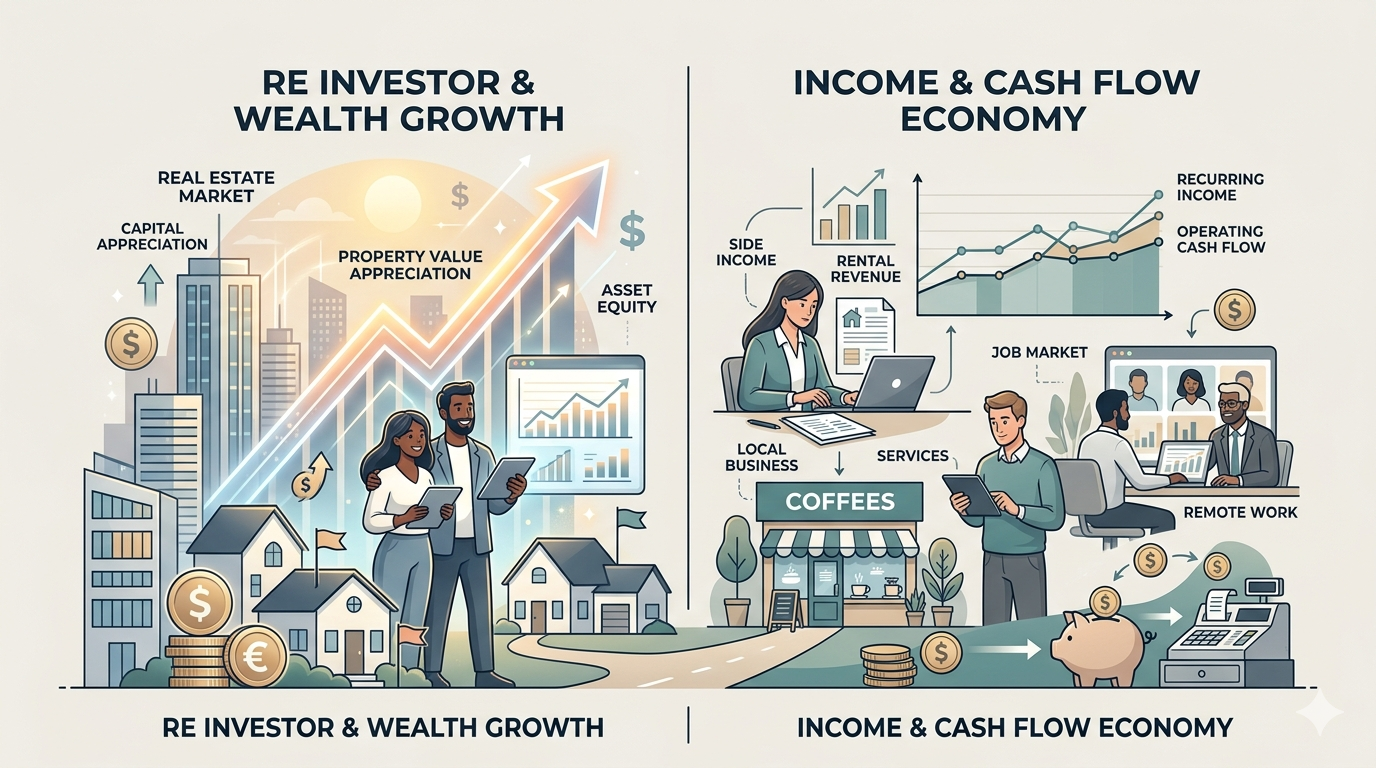
Over the past few years, I’ve been noticing a shift — a different kind of economy forming, at least within my network.
For a long time, housing did more than just provide shelter. Rising home values played a major role in supporting spending.
As home values increased, so did:
Access to credit
Willingness to take on risk
Overall consumer spending
But that dynamic is starting to weaken.
The Decline of Housing-Driven Liquidity
Home prices have come down from their peak, while borrowing costs remain elevated. The result is a noticeable compression in housing-driven liquidity:
Refinances are less beneficial
HELOC usage has become more cautious
Real estate transaction volumes are slower
This shift is significant because household consumption accounts for roughly 55–60% of Canada’s GDP.
Policy Is Responding — But Behavior Is Changing
We’re already seeing policy responses aimed at restoring activity:
Expanded insured mortgage programs
HST rebates
Zoning changes to increase housing density
However, when housing stops contributing to perceived wealth, consumer behavior changes.
Spending slows
Savings increase
Market turnover declines — in both real estate and small businesses
The Pressure Ahead: Mortgage Renewals
A large portion of borrowers renewing between 2025–2027 are expected to face payment increases of 20% or more.
This will further tighten household cash flow and reinforce more cautious financial behavior.
A Shift Toward Income and Cash Flow
What’s most interesting is how people are adapting.
There’s been a clear shift toward income generation:
More professionals are running businesses alongside full-time jobs
Growth in service-based businesses, especially tied to AI and automation
Increased interest in acquiring small businesses for cash flow
More Canadians are exploring opportunities outside the country for better returns
This shift is rational.
When asset appreciation becomes uncertain and leverage is more expensive, the focus moves toward controllable factors — income and cash flow.
What This Means for Real Estate Investors
This new environment changes how deals should be evaluated:
Cash flow and debt service coverage are now critical
Exit assumptions should be more conservative
Investment success depends less on appreciation and more on structure and income
A Healthier System — But a Different One
In many ways, this is a healthier system. But it requires a different mindset.
If you’re making decisions based on how the last cycle worked, you may be underestimating risk.
What Should You Do Next?
If you’re planning your next move — whether that’s:
Increasing income
Restructuring debt
Deploying capital
It’s worth taking a more strategic approach in today’s environment.
MMM: We just hit break even real estate - again.

A couple of years ago, detached pre-construction homes in my area were selling for around $1.4M.
We’re talking:
Double car garage
~2,400 sq ft
Standard family homes
A lot of people bought at those prices.
But as we moved through late 2025 into early 2026, something started to feel off.
A neighboring city — with better schools, more transit access, and stronger long-term development — was priced almost the same for resale homes.
That gap didn’t make sense.
And real estate doesn’t tolerate gaps for long.
The Quiet Shift
Fast forward to today…
Pre-construction pricing has quietly dropped to around $1.1M – $1.25M.
Resale prices have started following that trend.
Then came the real catalyst:
The HST rebate.
Effectively, that brought pricing down even further:
$1.1M → closer to ~$1.0M
That’s not a small adjustment — that’s a market reset.
It’s Already Showing Up in Resale
This past weekend alone, we saw:
$1.08M for a corner lot, 2,400 sq ft, with a finished rentable basement
$1.0M – $1.05M for similar homes without basements
This is the market adjusting in real time.
Why This Matters
Let’s break down that $1.08M deal:
If a buyer:
Puts 20% down
Rents out the basement
Their net housing cost drops to under $3,500/month.
That’s cheaper than renting just the upper portion of the same home.
Read that again.
We’re now at — or very close to — break-even real estate in parts of the GTA… assuming rents hold.
Two Things You Need to Understand Right Now
1. Markets Always Balance
Real estate behaves like a lake.
Throw a rock in, you get waves.
But eventually, everything settles.
Markets move together over time.
There are no permanent mismatches.
2. The HST Rebate Isn’t Just a “Buyer Perk”
It’s a pricing reset mechanism.
And it doesn’t stay contained to pre-construction.
It:
Pulls resale prices down
Resets buyer expectations
Creates appraisal risk for pre-construction closings over the next 1–2 years
The Bottom Line
We’re in the middle of a market rebalancing.
And these are the moments that matter most.
Because when pricing resets and opportunities open up…
The people who act make the biggest gains.
MMM: March was the warning. Renewals are next.
Inflation came in hotter than expected.
2.4% in March (up from 1.8%) — but that headline doesn’t tell the full story.
Gasoline prices alone are up:
+5.9% year over year
+21% month over month
A lot of the media is suggesting that the Bank of Canada is downplaying oil and choosing to “ignore” its impact.
I wouldn’t.
Because inflation doesn’t hit all at once — it moves in waves.

How Inflation Actually Spreads
Think of it in phases:
Phase 1: Energy spikes (we’re here)
Phase 2: Transportation and shipping costs rise
Phase 3: Wage pressure builds
Phase 4: Everything gets more expensive
Yes, it’s simplified—but directionally, this is how it plays out.
And once costs go up, they rarely come back down.
Why This Matters More Than You Think
2026 is shaping up to be a major mortgage renewal year.
A large number of Canadians locked in their mortgages during 2021.
Now, they’re approaching renewal…
In a completely different rate environment.
What’s Happening Right Now
Variable rates: Mostly unchanged
Fixed rates: Still elevated (bond yields are up ~0.4% from February lows)
Markets: Rate cuts are no longer being priced in, with about an 82% chance rates hold in April
The Real Problem
In a normal cycle, homeowners have options at renewal:
Refinance
Consolidate debt
Extend amortization
Access equity
But today?
Home prices in many markets are down 20–25% from their peak.
That limits flexibility.
You may want to restructure your mortgage—but it’s not always possible anymore.
What I’m Telling My Clients Right Now
1. Start Early — Earlier Than You Think
Don’t wait until 30, 60, or even 120 days before renewal.
Some of my clients start planning up to 11 months in advance—and they’re the most prepared.
2. Stop Chasing the “Best Rate”
You’ll hear this often, but it matters more now than ever:
It’s not just about the interest rate—it’s about cash flow.
3. Think Like an Investor
Your mortgage isn’t just a payment—it’s a tool.
Structure it so you can:
Adapt if rates change
Access equity when needed
Avoid getting stuck
Bottom Line
Inflation is picking up again.
Markets are reacting.
And mortgage renewals are heading straight into it.
March was the warning.
April will show if it’s real.
May might be too late.
MMM: Why self-employed people “pay less tax” (explained)
If you’re self-employed and have no idea why your accountant tells you to pay yourself a certain way…
Or you’ve heard that business owners “pay less tax” but don’t really understand how…
Let’s break it down with real numbers.
A Real Scenario
I recently worked through this with a client while filing their return.
Their corporation earned about $50,000 in net income in its first year.
They needed the cash, so leaving it in the corporation wasn’t an option.
So the question became:
How should you pay yourself?
Your Two Main Options
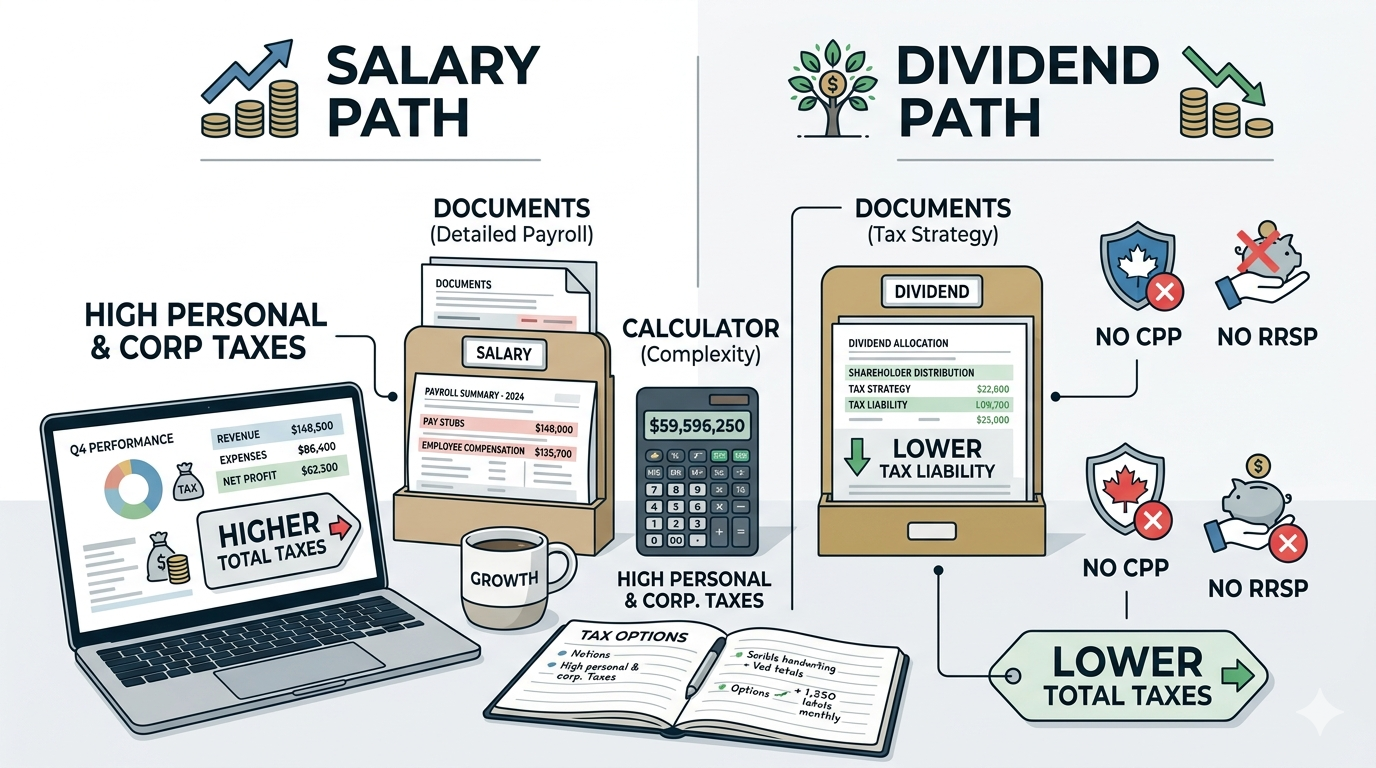
As a business owner, you typically have two ways to pay yourself:
Salary
Dividend
Same $50K.
Very different tax outcomes.
Option 1: Salary ($50K)
Here’s how it works:
The corporation pays you a $50,000 salary
Corporate income is reduced to $0 → no corporate tax
You pay personal tax + CPP (both employer and employee portions)
End Result:
Approximately $15,000 in total tax and CPP
Option 2: Dividend
This option involves a few more steps:
Step 1: Corporate Tax
$50,000 × 12.2% = ~$6,100
Remaining: $43,900
Step 2: Pay Dividend
You receive $43,900
Grossed up to about $50,500 taxable income
Step 3: Personal Tax
Federal tax: ~$6,800
Federal tax credit: -$4,300 → $2,500 net
Ontario tax: ~$2,200
Ontario tax credit: -$1,800 → $400 net
End Result:
$6,100 (corporate tax) + $2,900 (personal tax) = ~$9,000 total tax
The Trade-Off Most People Miss
At first glance, dividends look like the obvious winner.
You save about $4,000 in taxes
But here’s what often gets overlooked:
No CPP contributions
No RRSP contribution room
Many business owners don’t even realize they’re making this trade-off — it often gets defaulted during tax filing.
Why This Changes Over Time
The math isn’t static.
At different income levels, the strategy shifts.
Example at $100K income:
Dividends → ~$22,000 tax
Salary → ~$28,000 tax + CPP
You still save with dividends — but the gap narrows.
And at higher income levels, things like RRSP room and long-term planning become more important.
My Take
The goal isn’t just to pay less tax…
It’s to make better financial decisions over time.
How you pay yourself is one of the most important financial levers you have as a business owner.
Final Thoughts
There’s no one-size-fits-all answer.
The right strategy depends on:
Your income level
Your need for cash
Your long-term financial goals
If you’re self-employed and unsure what makes sense for your situation, it’s worth taking the time to get this right.
Because small decisions today can have a big impact over time.