
Most people know me as a mortgage agent, real estate investor, or CPA. How you know me probably depends on when you joined the journey.
But over the years, I’ve been involved in more than 12 ventures. Some made me money. Many lost me money.
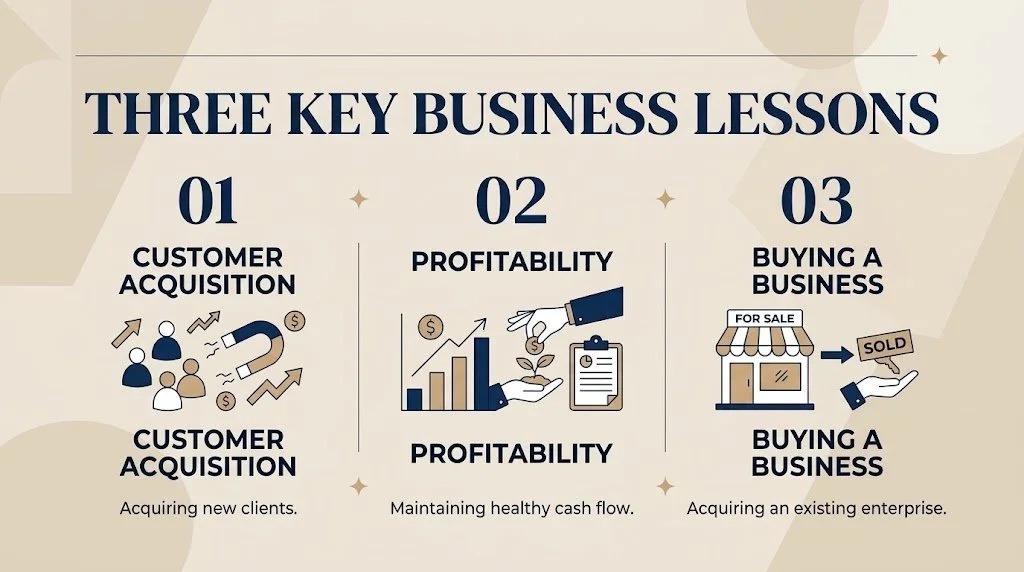
Every experience taught me something about business. Here are three lessons that have stuck with me.
1. Who Brings in Your Customers?
I haven’t historically relied much on paid advertising. Most of my tax and mortgage clients come through content and referrals, which has spoiled me a little.
But many businesses depend on third parties to drive demand. Think Airbnb or franchise businesses.
My most recent retail business taught me just how important it is to understand and control where your customers come from.
Ask yourself:
If sales slow down, can you generate more customers?
What will it cost to bring them in?
After those costs, will those customers actually leave you with a profit?
Having a recognizable brand or a great location doesn't automatically answer these questions.
You need to understand what drives your sales and how much control you have over it.
2. Not All Revenue Is Created Equal
Low-margin businesses can be tough.
You can serve customers all day, manage staff, and watch money flow through your bank account, only to have very little left over at the end.
Small increases in wages, rent, or product costs can quickly eat into your profits.
But there's an upside. Once your fixed costs are covered, additional sales can become much more profitable. If your existing space and team can handle more volume, you may be able to grow without adding another layer of rent or staffing.
Each sale still comes with costs, but more of that revenue can reach your bottom line.
High-margin businesses have their own challenges. Winning customers may take more time and trust, and you'll need to stand out from your competitors.
The takeaway? Understand what it costs to win a customer and deliver the sale. Revenue alone doesn't tell you how well your business is doing.
3. Buying a Business Means Buying Its Problems, Too
I understand the appeal of buying an existing business. You get customers, revenue, and an operating history instead of starting from scratch. I've done it myself.
But I've also seen people borrow against their homes, personally guarantee substantial loans, and buy businesses that demand more time than they have.
A business that works for the seller might not work for you.
The seller might be working 60 hours a week for very little pay. You might need to hire a manager to replace them. And if you're financing the purchase, the business will have loan payments it didn't previously carry.
Before buying a business, ask yourself these questions:
Do the sales add up? Reconcile sales with payment processor statements, bank deposits, and tax filings, accounting for fees and timing.
Do the margins make sense? Check whether inventory usage and product costs support the reported sales and margins.
What does the owner actually do? Understand their day-to-day responsibilities and what it would cost to replace them.
What's left at the end? Calculate what's available after operating costs, loan payments, and taxes.
And when a seller says, "I barely spend any time here," don't take that at face value.
Ask who handles staffing, purchasing, and the calls when things go wrong.
Go deeper than the financial statements. Verify the story.
How These Lessons Shape the Way I Work With Business Owners
Financing or tax compliance is often how business owners first find me. But some of the most valuable work happens throughout the year.
That means preparing monthly financial reports, tracking profitability against targets, and flagging problems while there's still time to act.
If your sales are increasing but your profits aren't growing the way you expected, you should know why.
If your costs are creeping up, you should see it before year-end, not after the damage is done.
Your financial numbers should help you make better decisions, not just tell you what happened last year.
Want a Clearer Picture of Your Business Numbers?
If you own a business and want to better understand your profitability, costs, and cash flow, let's connect.
