
MMM- Housing Isn’t Driving the Economy Anymore
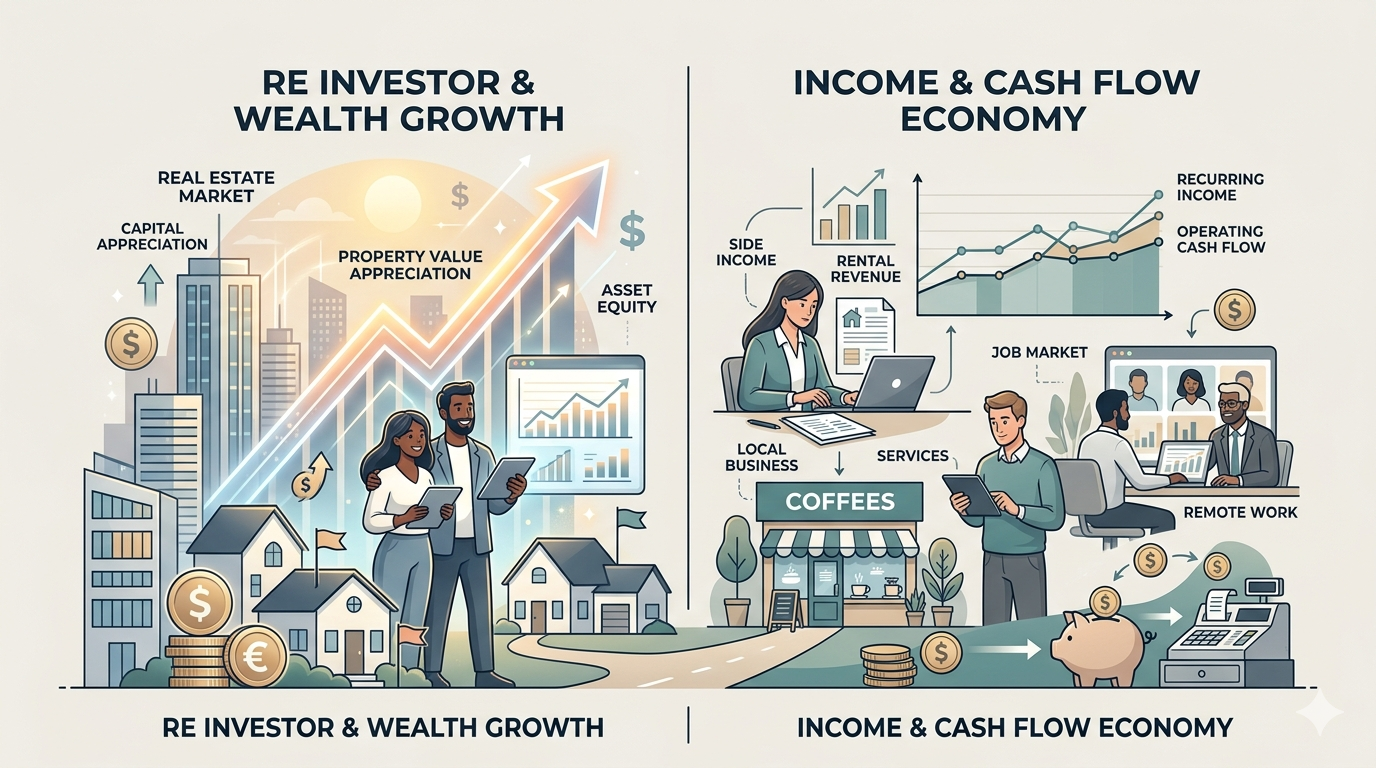
Over the past few years, I’ve been noticing a shift — a different kind of economy forming, at least within my network.
For a long time, housing did more than just provide shelter. Rising home values played a major role in supporting spending.
As home values increased, so did:
Access to credit
Willingness to take on risk
Overall consumer spending
But that dynamic is starting to weaken.
The Decline of Housing-Driven Liquidity
Home prices have come down from their peak, while borrowing costs remain elevated. The result is a noticeable compression in housing-driven liquidity:
Refinances are less beneficial
HELOC usage has become more cautious
Real estate transaction volumes are slower
This shift is significant because household consumption accounts for roughly 55–60% of Canada’s GDP.
Policy Is Responding — But Behavior Is Changing
We’re already seeing policy responses aimed at restoring activity:
Expanded insured mortgage programs
HST rebates
Zoning changes to increase housing density
However, when housing stops contributing to perceived wealth, consumer behavior changes.
Spending slows
Savings increase
Market turnover declines — in both real estate and small businesses
The Pressure Ahead: Mortgage Renewals
A large portion of borrowers renewing between 2025–2027 are expected to face payment increases of 20% or more.
This will further tighten household cash flow and reinforce more cautious financial behavior.
A Shift Toward Income and Cash Flow
What’s most interesting is how people are adapting.
There’s been a clear shift toward income generation:
More professionals are running businesses alongside full-time jobs
Growth in service-based businesses, especially tied to AI and automation
Increased interest in acquiring small businesses for cash flow
More Canadians are exploring opportunities outside the country for better returns
This shift is rational.
When asset appreciation becomes uncertain and leverage is more expensive, the focus moves toward controllable factors — income and cash flow.
What This Means for Real Estate Investors
This new environment changes how deals should be evaluated:
Cash flow and debt service coverage are now critical
Exit assumptions should be more conservative
Investment success depends less on appreciation and more on structure and income
A Healthier System — But a Different One
In many ways, this is a healthier system. But it requires a different mindset.
If you’re making decisions based on how the last cycle worked, you may be underestimating risk.
What Should You Do Next?
If you’re planning your next move — whether that’s:
Increasing income
Restructuring debt
Deploying capital
It’s worth taking a more strategic approach in today’s environment.
