
MMM: Are We Heading Towards Stagflation?
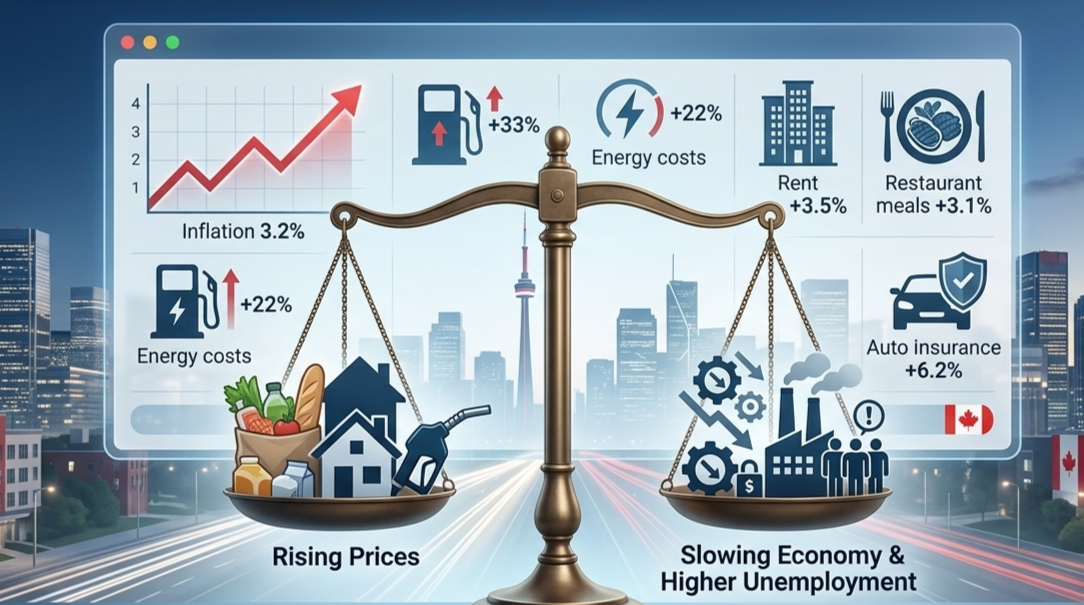
Canada's inflation rate climbed to 3.2% in May, a figure that may not seem alarming at first glance. However, when combined with slowing economic growth and a gradually weakening job market, it raises an important question:
Could Canada be moving toward stagflation?
While we're not there yet, understanding the warning signs can help homeowners, investors, and everyday Canadians make smarter financial decisions.
What Is Stagflation?
Stagflation is a rare economic environment where inflation remains high while economic growth slows and unemployment rises.
It's particularly challenging because it impacts households from multiple directions:
Everyday expenses become more expensive.
Job security becomes less certain.
Interest rates may stay elevated longer than expected.
Unlike a typical economic slowdown, stagflation limits the ability of central banks to stimulate the economy without making inflation even worse.
Inflation Is Becoming More Widespread
One of the biggest contributors to May's inflation increase was gasoline, which rose 33% year over year. Overall energy prices increased 22%.
The impact of higher fuel costs doesn't stop at the gas station.
As transportation and operating costs rise, businesses often pass those expenses on to consumers, resulting in higher prices across the economy.
Recent data already reflects this trend:
Restaurant meals: +3.1%
Auto insurance: +6.2%
Rent: +3.5%
Perhaps even more important, inflation excluding gasoline also moved higher, suggesting that price pressures are spreading across multiple sectors rather than being driven by a single category.
Why This Matters
Inflation on its own is manageable. The greater concern is when inflation stays elevated while the broader economy continues to weaken.
This creates a difficult balancing act for policymakers.
Normally:
Rising inflation leads to higher interest rates.
Slowing economic growth leads to lower interest rates.
Stagflation presents both challenges simultaneously, leaving central banks with fewer effective policy options.
What It Means for Homeowners and Investors
If inflation remains persistent while economic conditions soften, Canadians could face several challenges:
Higher Borrowing Costs
Mortgage rates may stay elevated for longer, increasing borrowing costs for homebuyers and making refinancing less attractive.
Pressure on Consumer Spending
As households spend more on necessities like fuel, housing, and insurance, discretionary spending tends to decline, which can slow business growth.
Slower Housing Activity
Higher financing costs and reduced consumer confidence can put pressure on housing demand, leading to a more cautious real estate market.
Investment Volatility
Corporate profits may come under pressure as operating costs rise and consumer spending slows, creating a more uncertain environment for investors.
Are We in Stagflation Right Now?
Not necessarily.
A true stagflation environment would likely involve significantly higher inflation alongside a much weaker labour market than Canada is currently experiencing.
However, the recent data suggests that several key indicators are moving in a direction worth monitoring.
Rather than reacting to a single headline, it's important to watch the broader trends over time.
Key Indicators to Watch
Instead of focusing on daily news cycles, keep an eye on these economic signals:
Inflation: Is it continuing to rise across multiple categories?
Unemployment: Is the labour market weakening further?
Bond yields: Are investors expecting higher inflation and interest rates to persist?
Together, these indicators provide a clearer picture of where the economy may be heading than any single monthly report.
The Bottom Line
One inflation report doesn't define the future of the Canadian economy. But a consistent pattern of rising inflation, slowing growth, and weakening employment deserves attention.
Successful investing and long-term wealth building aren't about reacting to headlines—they're about recognizing trends early and making informed decisions.
For now, the focus remains on inflation, unemployment, and bond yields rather than short-term market noise. Staying informed and maintaining a long-term perspective will always be a stronger strategy than chasing the latest headline.
